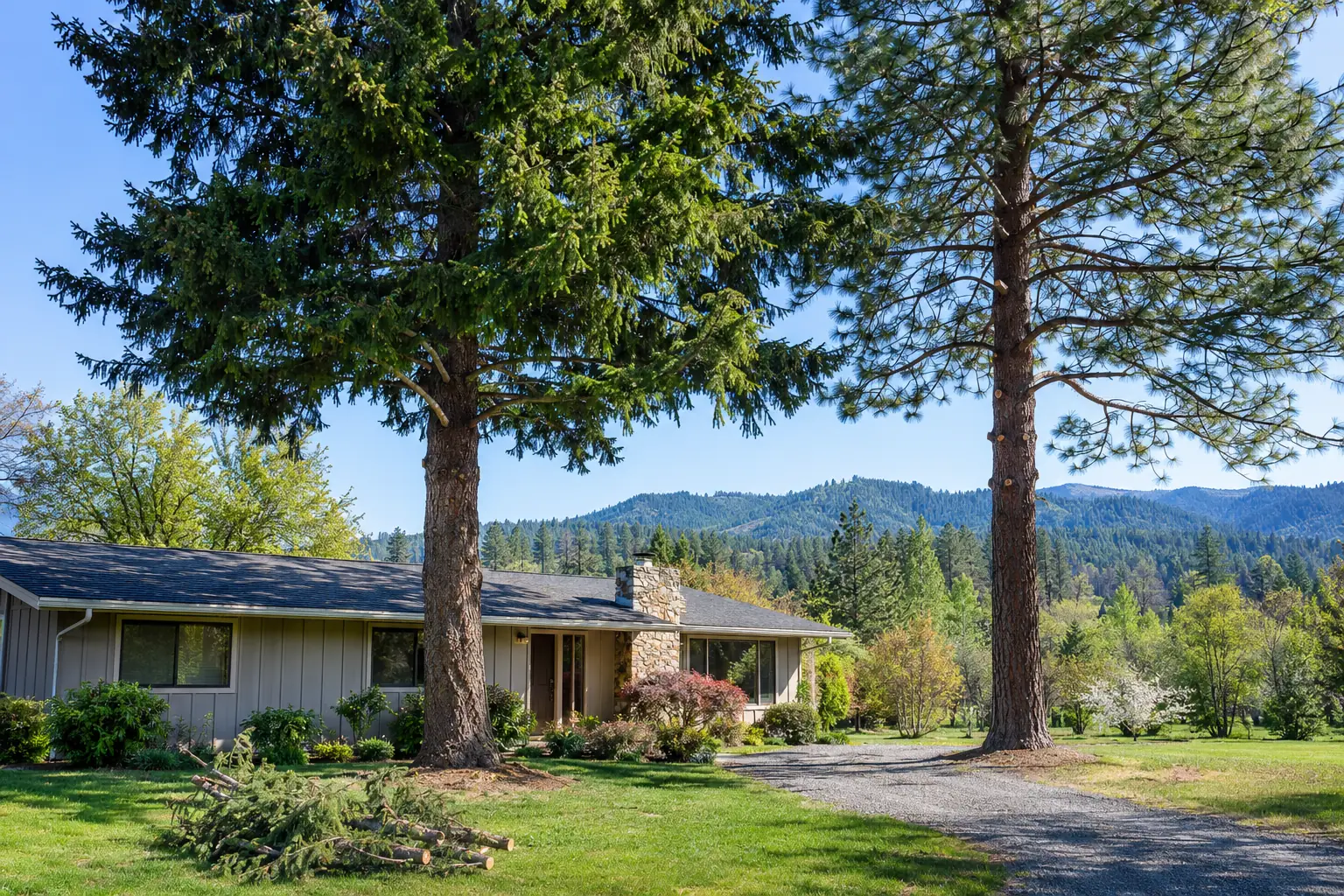
Tree trimming in Grants Pass means cutting selected branches off a living tree to clear a roof, a sidewalk or a view, remove dead wood or lighten a heavy limb, without taking the tree down. Call (541) 507-9679 to reach a single tree service in the Grants Pass area, independent of this site, with an active Oregon CCB license. Have it explain which cuts it would make and why. A trimming quote seldom carries a fee, and the company can say on the phone whether yours would.
Trimming, pruning and crown reduction compared
Homeowners and estimates alike tend to treat trimming and pruning as one job. ISA calls pruning the most common tree care task there is. The names for what gets cut matter more.
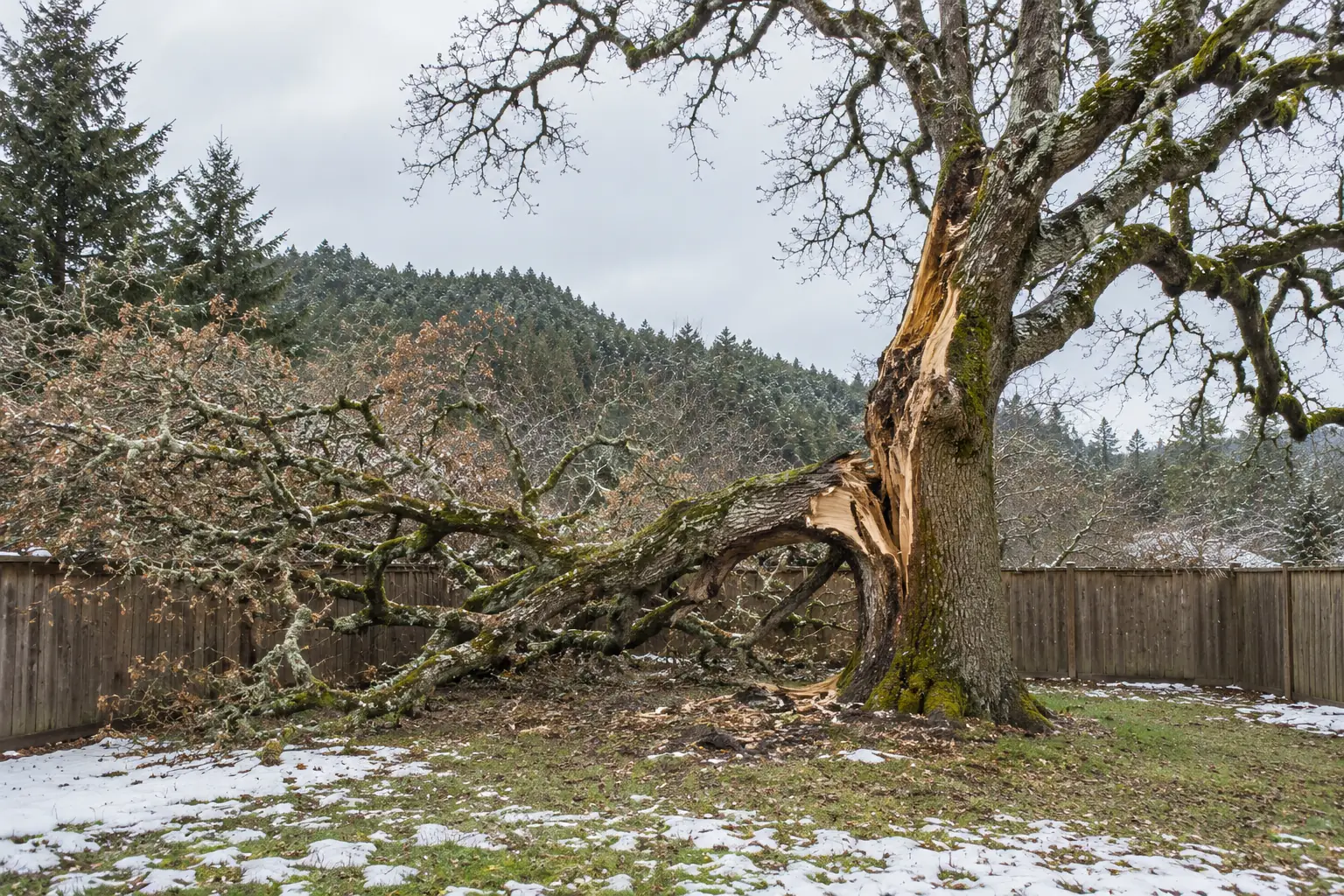
The International Society of Arboriculture's consumer brochure on pruning mature trees sorts the work into a few types:
- Cleaning takes out dead, dying, diseased and weakly attached branches.
- Raising removes the lowest limbs so there is room for a driveway, a walkway, a roofline or a mower.
- Reduction shortens a tree's height or spread by shortening leaders and limb tips to side branches big enough to take over. The brochure sets that size at no less than one-third the width of the stem being cut.
- Thinning at the outer crown, now called reducing density, lets more light or wind through.
The same brochure advises taking off no more than about 25% of the crown in one visit, and less on an older tree. A good estimate says which of these the crew will do and roughly how much will come off.
Why topping does more harm than good
Topping means cutting big branches or the main stem back to stubs, and it is the one kind of trimming to say no to. ISA's brochure Why Topping Hurts Trees describes it as possibly the most damaging way to prune a tree.
The brochure gives several reasons. Topping can strip 50 to 100% of the leaf-bearing crown, which can starve the tree. The stubs are wounds the tree often cannot close, so decay spreads. The tree answers with a burst of fast shoots, which in some species grow up to 20 feet in one year, and those shoots are attached only in the outer wood, so they break easily in wind and ice.
Grants Pass writes the same idea into its code. Title 10 defines topping as cutting limbs back to stubs more than 3 inches in diameter, to a degree that substantially removes the normal canopy, and it bans topping any tree on public or semi-public property except storm-damaged trees or certain trees under wires where the city decides nothing else will work.
When to prune the common Grants Pass trees
The best month depends on the species and on what is being cut. ISA says removing weak, dead or diseased limbs lightly can be done in any season. Heavy live pruning is better timed.
| Tree | Better time for heavy pruning | Source |
|---|---|---|
| Oregon white oak, California black oak, maples and other hardwoods | Dormant season, after leaves drop | OSU Extension EC 1576 |
| Ponderosa pine and Douglas-fir | October through February, not spring or early summer | OSU Extension EC 1576 |
| Apple, pear, plum and other fruit trees | Late winter through early spring, while dormant | OSU Extension, 2024 |
The conifer advice comes from Reducing Hazardous Fuels on Woodland Property: Pruning, written by OSU Extension foresters for Jackson and Josephine counties. It says October through February keeps pitch flow low, since pitch can attract harmful insects, and that spring and early summer pruning of conifers invites pitch moth attack. It also advises against wound dressing.
For fruit trees, OSU Extension's backyard fruit tree article, published February 2024 and reviewed in 2025, puts pruning in late winter through early spring while the trees are dormant. An OSU Ask Extension answer on old fruit trees adds that pruning wounds on older apple and pear trees can let in fire blight, so cuts on those trees should be few where the disease is a problem.
Pines need one more check. Fresh pine branches between about 3 and 8 inches across are prime breeding wood for Ips bark beetles, according to the Oregon Department of Forestry's pine engraver fact sheet. Ask for pine limbs of that size to be chipped or hauled. The oak and pine problems guide has more on beetles.
City rules for street trees and the right-of-way
A tree in the planting strip between the curb and the sidewalk sits on semi-public land, and Grants Pass requires a free permit before anyone prunes it. The city's tree permits page says the permit covers planting, pruning or removing a tree on public or semi-public property, including the right-of-way, and right-of-way work must be done by a contractor the city has prequalified, who must hold ISA certification.
The removal or pruning application, revised October 30, 2023, draws the line for homeowners. You may do the pruning yourself if every branch you cut is 3 inches or smaller at all points, you take no more than 25% of the tree's structure and every cut stays at or below 10 feet off the ground. You still apply first. Bigger cuts, higher cuts or heavier pruning need a prequalified arborist to fill out the form and do the work. The form also states that topping and pollarding are prohibited.
Ask the company you reach through (541) 507-9679 whether it is on the city's prequalified list before you book any street-tree pruning. The Grants Pass tree rules guide explains the permit steps, Heritage Trees and penalties.
Clearance over Grants Pass sidewalks and streets
The city expects owners to keep branches high enough for people and cars, and its pruning standards for properties along the right-of-way say:
- Low branches must be trimmed to at least 15 feet above the roadway.
- Low branches must be trimmed to at least 8 feet above the sidewalk, and shrubs and trees cut back so they do not crowd the walk.
- At corners, shrubs must be kept to 30 inches tall or less for 20 feet from the intersection.
- Shrubs should be held at least 6 inches back from the curb so they do not block drainage or street sweeping.
The city's development code says the same for street trees. Section 23.073 of Article 23 requires growing street trees to be pruned for at least 8 feet of clearance above sidewalks and 15 feet above the road. The city notes that major pruning in the right-of-way still needs a tree permit. Questions about clearance go to the Streets Division at 541-450-6110.
Branches near power lines belong to Pacific Power
Limbs growing into overhead wires are not a homeowner or general tree service job. Pacific Power's vegetation management page warns customers not to prune or take down trees close to power lines.
For the distribution lines on poles along the street or through a back lot, Pacific Power says its own crews handle routine pruning at no cost to you. For the wire between the pole and your house, it offers a free temporary disconnect so a homeowner or licensed professional can trim safely. To set that up, call Pacific Power customer service at 1-888-221-7070. A limb that is already down on a wire, or resting on one, is another matter: stay 35 feet back, call 911, then Pacific Power's outage number, 1-877-508-5088. The emergency tree removal page explains what follows.
What changes the price of tree trimming
Trimming is usually priced per tree, and height moves the number most.
LawnStarter's tree trimming cost guide, updated September 24, 2026, lists $430 to $640 per tree as a typical cost. By height, it lists $85 to $415 under 30 feet, $215 to $790 from 30 to 60 feet and $475 to $1,835 over 60 feet. These are national figures, not Grants Pass quotes, and the written estimate from the company that sees your trees is the number that counts.
Local things that push a quote up or down:
- Height and climbing. A tall fir or pine that has to be climbed takes longer than a fruit tree reached from a ladder or a lift.
- What is underneath. Limbs over a roof, a deck, a fence or a greenhouse have to be lowered on ropes instead of dropped.
- Access. A bucket truck needs a driveway or a firm lawn. A backyard behind a narrow gate means more hand carrying.
- Number of trees. Pricing several trees together may lower the cost of each.
- Cleanup. Chipping and hauling every branch costs more than leaving chips or firewood on site. The brush and debris removal page explains the choices.
If you want routine tree care on several trees, such as clearing dead wood every few years, ask for them to be priced as one visit. The Grants Pass cost guide has removal prices in case trimming will not solve the problem.
What to ask at the estimate visit
A few direct questions at the estimate visit tell you most of what you need.
- What is your CCB number? Check it on the Oregon CCB license search.
- Is anyone on the crew an ISA Certified Arborist, and are you on the city's prequalified list if the tree is a street tree?
- Which branches will come off, and about what share of the crown is that?
- Will you make reduction cuts back to side branches, and will you avoid topping?
- Is hauling the branches away included in the price?
- Do you carry liability insurance, and can you send proof?
Ask for every answer in the written estimate. The hazard tree removal page lists the warning signs that make trimming a poor fix.
Trimming on rural lots and in fire season
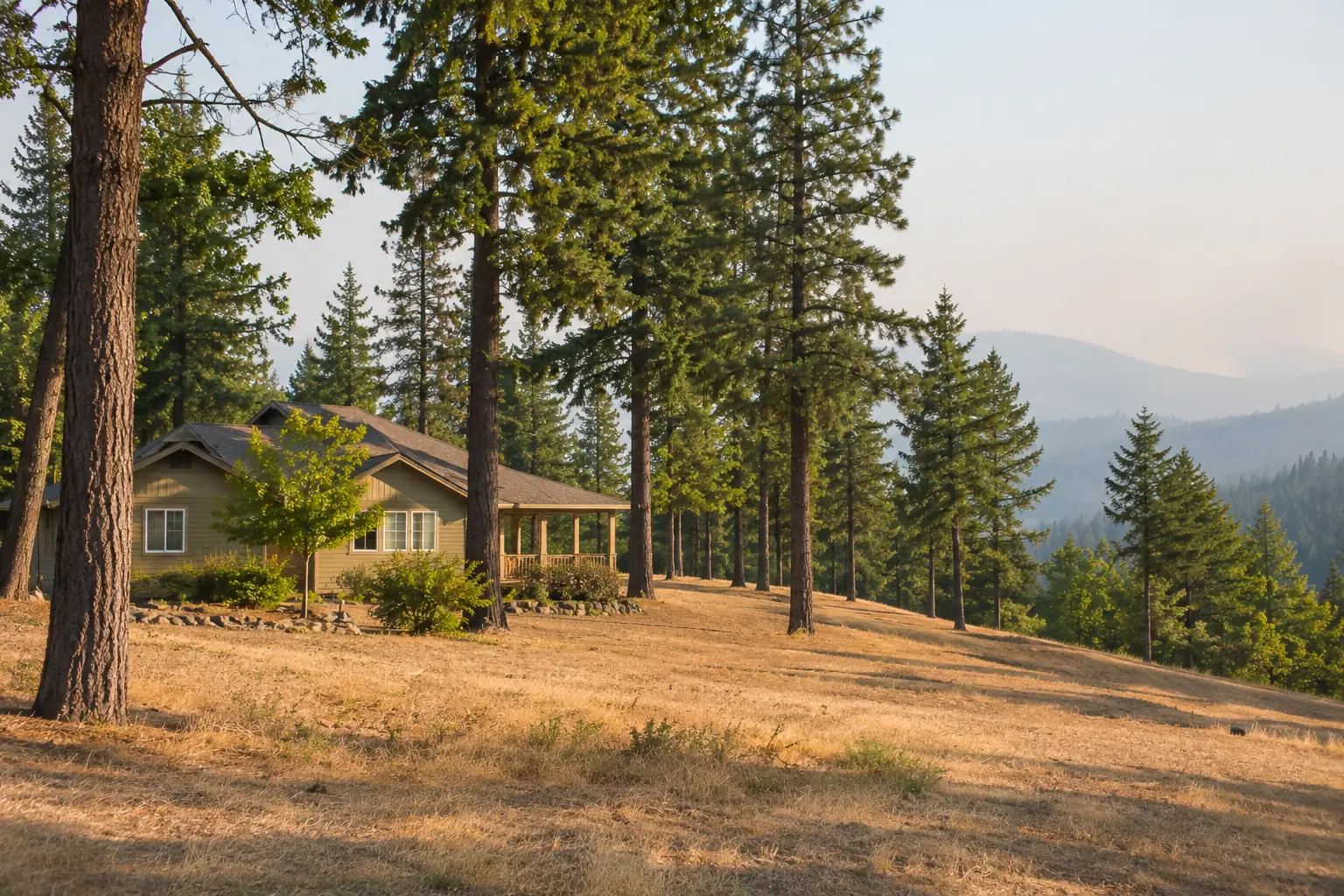
On rural lots, trimming is often about fire safety. OSU's fuels pruning guide suggests limbing trees up 8 to 10 feet so a ground fire has a harder time reaching the crown, while leaving live branches on at least a third of the tree's height. During fire season, the Oregon Department of Forestry's 2026 regulated closure for southwest Oregon limited power saw hours on and near the forestland it protects, and banned saws on extreme fire danger days. The wildfire tree work guide explains those levels. Trimming calls come in from across the area, including Merlin, Williams and Wonder. Heavy brush may call for lot and land clearing. For how the referral works start to finish, go to the Grants Pass tree removal home page.
Frequently asked questions
Do I need a permit to trim a tree in my own Grants Pass yard?
A tree wholly on private land is generally outside the city tree permit, which covers public and semi-public land such as the planting strip. Designated Heritage Trees are the main exception. If you are not sure where the right-of-way ends, call the city at 541-450-6000 before work starts.
How much of a tree can be cut in one visit?
ISA's consumer guidance says no more than about 25% of the crown at once, and less on a mature tree. For street trees, Grants Pass treats removing more than 25% of the structure as work that needs a prequalified arborist.
Is it safe to trim trees in summer?
Light trimming of dead branches can happen any time. Heavy pruning of firs and pines is better from October through February, and summer saw hours are limited near forestland.
Who trims branches growing near the power line to my house?
Do not trim them yourself. Pacific Power handles the lines on poles at no cost and offers a free temporary disconnect of your service line so trimming can be done safely. Call 1-888-221-7070 to ask. If a branch has broken and is lying on the wire, keep 35 feet away and call 911, then 1-877-508-5088.