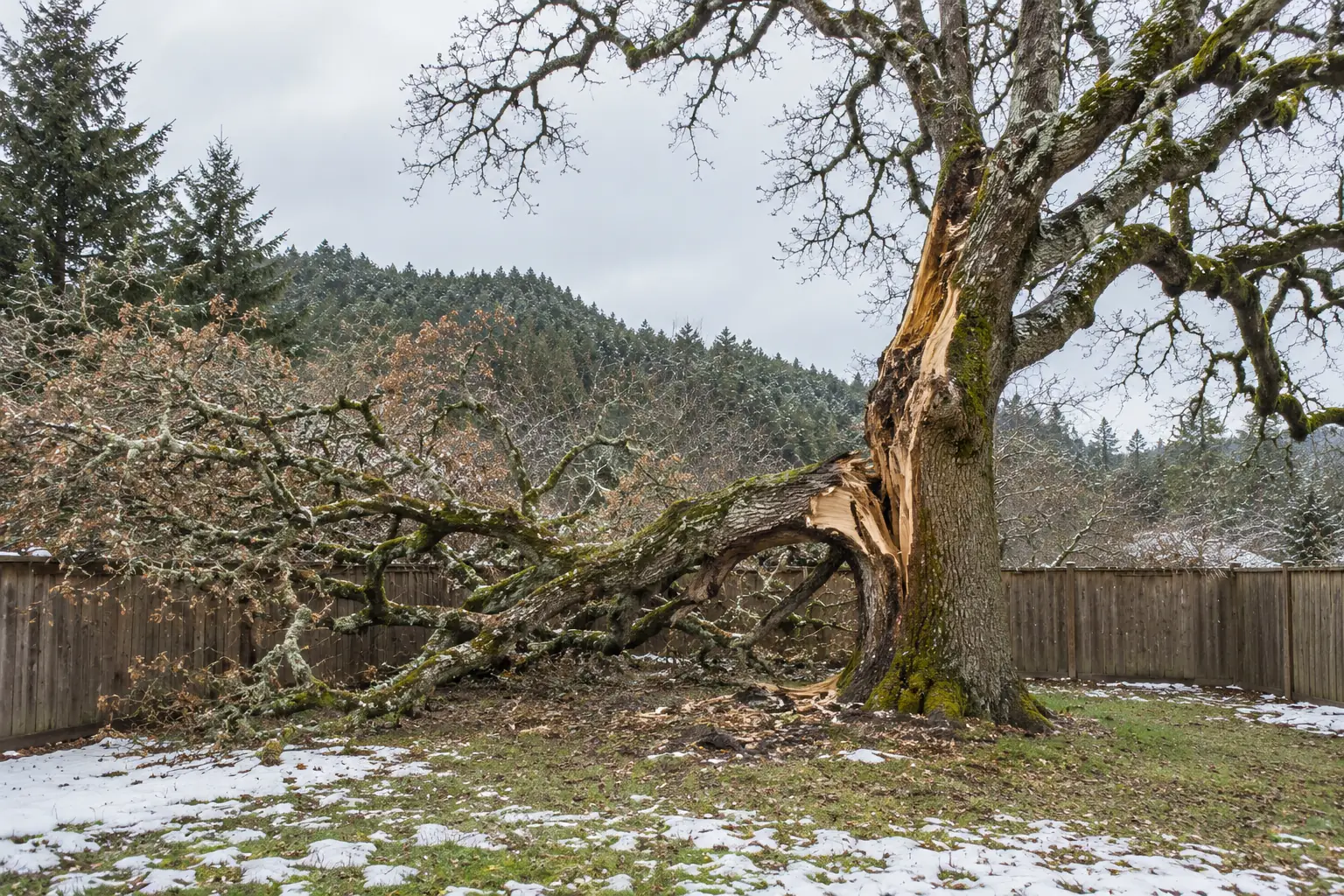
After wind, heavy snow or ice breaks trees in Grants Pass, call (541) 507-9679 to reach one independent Grants Pass-area tree service holding an active Oregon CCB license. Tell it what fell and ask what it can take on, whether that is a fallen tree, split or hanging limbs or a yard full of storm wood. Take photos first. A tree on a house is an emergency. A tree on a power line means staying 35 feet back and calling 911, then Pacific Power at 1-877-508-5088.
Storms that bring trees down around Grants Pass
Winter is the usual season for storm tree damage in Josephine County, when wet snow, ice and strong wind load up branches that already hold water. The National Weather Service office in Medford covers Grants Pass, and its forecasts and warnings are the place to watch when a system is coming.
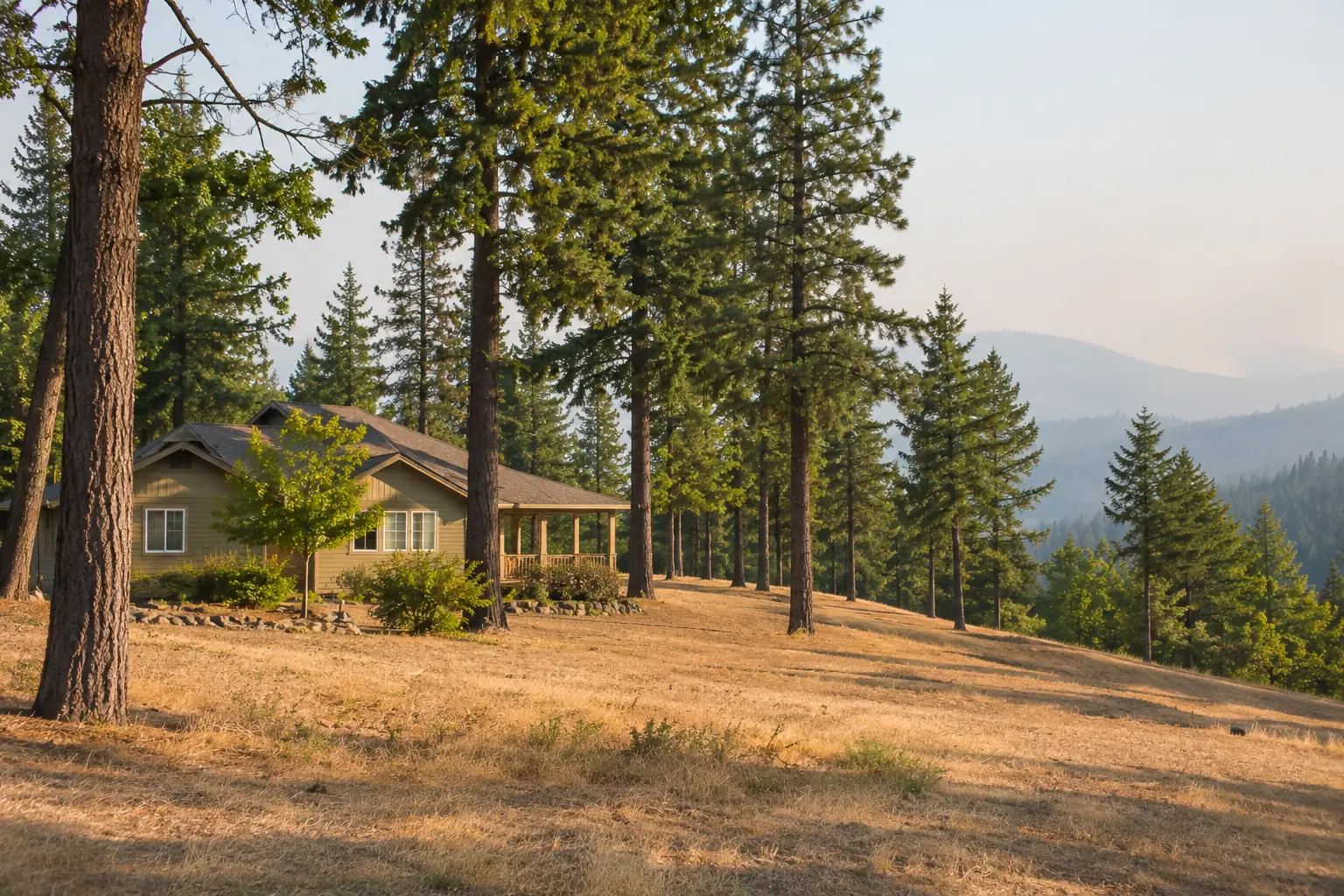
A recent example shows how fast it can happen. The NWS Medford February 2019 climate summary describes a month of repeated snow. One round on February 15 closed part of I-5 from Hugo to Canyonville for about three and a half hours. Later that month, 8 to 12 inches of heavy, wet snow fell to the valley floors in the Umpqua Basin to the north. The summary says that brought thousands of downed trees and power outages that lasted days, and for many people weeks. Grants Pass did not take the worst of that storm, but the same kind of weather can reach the Rogue Valley floor.
Sorting the damage: today or this week
Storm damage falls into two groups, and knowing which one you have tells you how fast to move. Act now when a tree or limb is resting on a building, shutting off a road or your drive, dangling above the roof or where kids play, or caught up in electric lines. The rest can wait for a normal estimate.
If your damage is in the first group, use the emergency tree removal page and keep people away from the tree. If it is in the second group, such as a fallen tree in an open pasture or broken branches scattered on the lawn, you have time. A company booked a few days out can often give a better plan and price than one rushing between emergency calls. Branches lying in the open, clear of buildings, cars and the road, can wait.
How snow, ice and wind break local trees
Different trees fail in different ways, and the type of break affects how the job is done. Knowing what you are looking at helps you describe it on the phone.
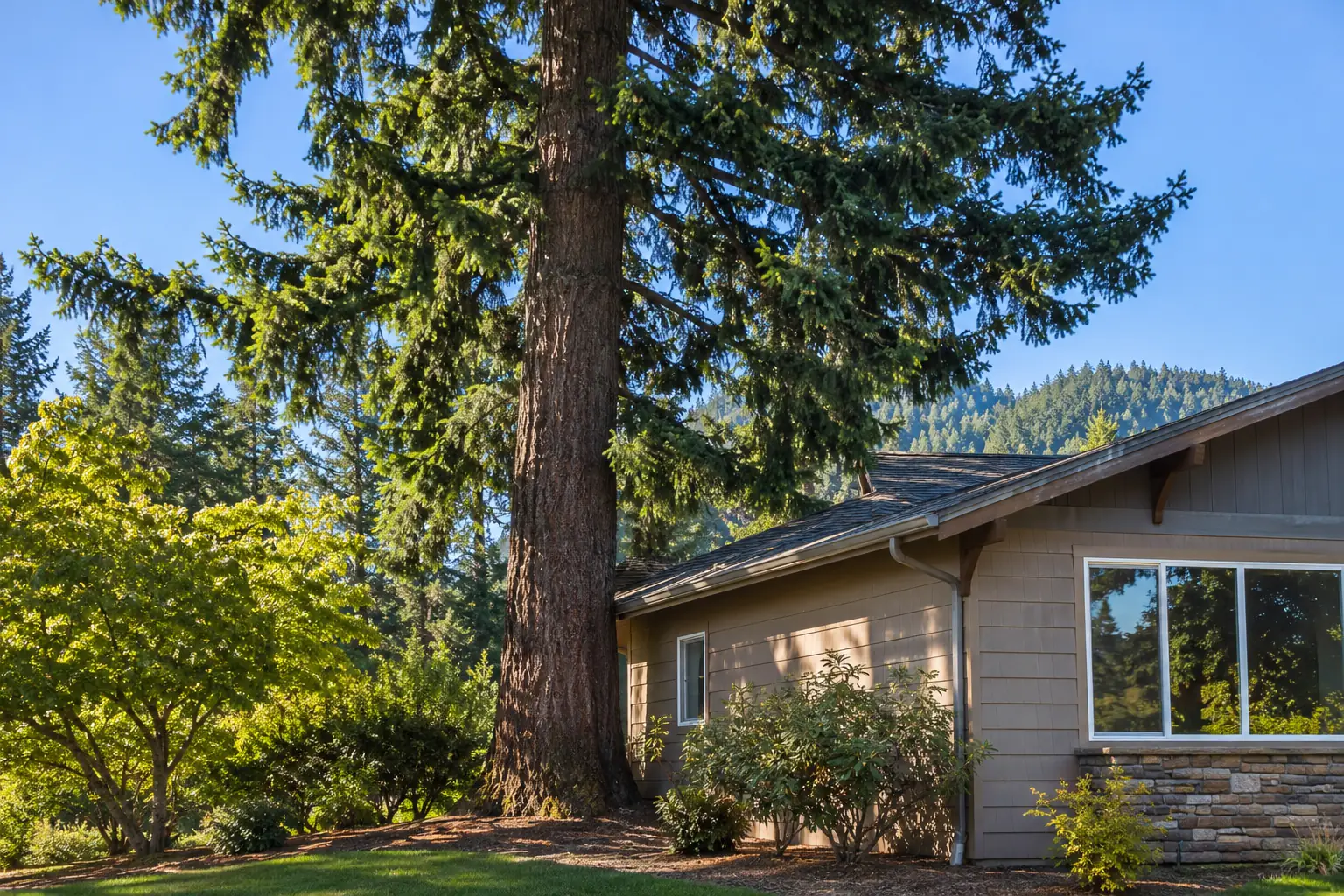
Conifers such as Douglas-fir and ponderosa pine hold snow on their needles all winter, so heavy wet snow can snap tops and strip long limbs. Broadleaf trees such as oaks shed their leaves, but their wide limbs can still collect ice. Oaks carrying a lot of mistletoe may lose limbs too. The Pacific Northwest plant disease handbook notes that heavily infested branches often break in storms or high winds. Trees already weakened by drought or beetles fail more easily. The oak and pine problems guide explains which local trees are under stress and why.
Wind is the other big cause. Saturated winter soil lets a whole tree tip over with its root plate, which leaves a crater and a raised mat of soil and roots on one side.
Damaged trees that are still standing
A storm-damaged tree that is still upright can be the hardest job of all, because the damage is partly hidden. The tree company will look closely before it decides whether to prune, cable or remove.
Things it will check include cracks where big limbs join the trunk, a top that has snapped and is now hanging, a root plate that has lifted on one side and limbs that broke but are still caught higher up. Those caught limbs, often called hangers, can drop days later with no wind at all, so keep people out from under them. If a tree has lost more than half its crown or has split down the trunk, removal is often the safer choice. The company should explain its reasoning in the estimate. For trees that were already in trouble before the storm, the hazard tree removal page covers what to look for.
Storm damage and your homeowners insurance
Insurance may help with storm tree costs, but policies differ and the details matter. Call your insurer early and follow its steps, since this service cannot tell you what your policy covers.
As a general pattern, many policies treat a tree that falls on an insured structure differently from one that falls in an open yard. Some pay a set amount for debris removal and some pay nothing for a tree that hit nothing. Before cleanup starts, take wide photos and close photos of the tree and the damage, and keep notes on the date and the storm. Ask the tree company for a written, itemized estimate, since adjusters usually want one. Confirm every point with your own insurer before you agree to work.
Clearing storm wood and the burning rules
Storm cleanup leaves a lot of wood and brush, and what you do with it is limited by local fire rules. The easy route is to have the tree company chip the brush and either haul the wood or cut it to firewood length.
If you plan to burn the brush yourself, check first. Josephine County's burn advisory line at 476-WOOD (9663) carries a daily message for open and barrel burning, and the county says all outdoor burning is prohibited during fire season. For pine wood, the Oregon Department of Forestry's pine engraver fact sheet warns that fresh pine pieces 3 to 8 inches across can breed bark beetles that then attack live pines. It advises against leaving that kind of fresh slash or firewood near live pines from January through September unless it is chipped, burned or well dried.
Fallen lines and the service drop
Any storm-damaged tree touching a wire is a matter for 911 and Pacific Power before it is a job for a tree company. Treat every downed line as live.
Stay at least 35 feet away, call 911, then call Pacific Power at 1-877-508-5088 to report the line. After the utility has handled the wire, the tree company can clear the tree. If the storm left a limb resting on or near the line from the pole to your house, Pacific Power says on its vegetation management page that it can provide a free temporary service disconnect so the work can be done safely.
Storm cleanup in the towns around Grants Pass
Storm calls come in from all over the area, not only from inside the city. Rural roads tend to have taller timber close to the road, longer driveways and more trees per lot.
North of town, Hugo sits at the south end of the stretch of I-5 that snow closed in February 2019, and Merlin is a short drive from there. Out along US 199, Wonder and Selma have long rural driveways where one fallen fir can cut off a home. South of town, Murphy and Provolt take calls too. When you call, give clear directions and mention any downed trees on the road in, so the company knows what it is driving into.
For what the line is and how the referral works, see the Grants Pass tree removal home page. To get a sense of storm cleanup prices, read the tree removal cost guide.
Frequently asked questions
Should I wait for my insurance adjuster before removing a fallen tree?
Call your insurer first and ask. Many insurers want photos and an estimate before work begins, but they may not want you to wait if a tree is letting rain into the house. Take photos from a safe distance before anything is moved, and keep every receipt.
Can I cut up a fallen tree myself?
A tree lying flat in open ground is less risky than one resting on a house or caught in other trees, but fallen trees can still roll and spring. Never cut a tree that is touching a wire or resting on a structure. During fire season, saw use on and near ODF-protected land is limited by fire danger level.
How long after a storm will a company be able to come?
That depends on how widespread the damage is. After a big storm, tree companies triage calls and handle trees on houses and roads first. This service cannot promise a time. Tell the company exactly what the tree is lying on so it can judge how urgent your job is.
What do I do with all the storm brush?
The simplest choice is to have the tree company chip it. If you want to burn it, call the Josephine County burn advisory line at 476-WOOD (9663) for the day's status, and remember that outdoor burning is not allowed during fire season.
Is a tree that lost its top going to die?
Not always, but it is weaker. A conifer that loses its top may grow a new leader, though decay can enter at the break. A broadleaf tree with split limbs may be pruned back. Ask the company whether the tree can be kept safely and what it would cost to remove it later.